
The Indian Premier League (IPL) is more than a cricket tournament. It is one of the most valuable sports properties in the world. Since its launch in 2008, the IPL has evolved into a billion dollar league, attracting global investors, corporate giants, celebrities, and private equity firms.
Behind every IPL franchise stands a powerful ownership group that drives its financial strength, brand identity, and long term strategy. As of IPL 2026, the league consists of 10 franchises owned by business tycoons, multinational corporations, media houses, and investment firms.
Complete List Of IPL Team Owners 2026:
| Team | Owner(s) | Parent Company | Year Acquired | Estimated Net Worth (2026) |
|---|---|---|---|---|
| Chennai Super Kings | N. Srinivasan | India Cements | 2008 | $1+ Billion (approx.) |
| Mumbai Indians | Mukesh Ambani | Reliance Industries | 2008 | $90+ Billion |
| Royal Challengers Bengaluru | United Spirits (Diageo) | Diageo | 2008 | Diageo Market Cap: $70+ Billion |
| Kolkata Knight Riders | Shah Rukh Khan & Group | Red Chillies Entertainment | 2008 | $700+ Million (SRK approx.) |
| Delhi Capitals | GMR & JSW | Joint Ownership | 2008 | GMR: $3+ Billion / JSW Group: $20+ Billion (Group Valuation) |
| Rajasthan Royals | Manoj Badale | Emerging Media | 2008 | $200–300 Million (estimated) |
| Sunrisers Hyderabad | Kalanithi Maran | Sun TV Network | 2012 | $2–3 Billion |
| Punjab Kings | Zinta, Wadia, Burman, Paul | Multi Owner | 2008 | Combined Group Valuation: Multi-Billion (Wadia & Burman Groups) |
| Gujarat Titans | CVC Capital Partners | Private Equity | 2021 | Assets Under Management: $100+ Billion |
| Lucknow Super Giants | Sanjiv Goenka | RPSG Group | 2021 | $3–4 Billion (Group Valuation) |
Who Owns Each IPL Team?
The 2026 IPL season features a powerful mix of billionaire industrialist groups and Bollywood legends who drive the commercial success of the league. While iconic names like Mukesh Ambani and Shah Rukh Khan continue to lead their respective franchises, the current year has seen massive ownership shifts with global investors and private equity firms entering the market.
Mumbai Indians (MI) Owner: Reliance Industries
Mumbai Indians are owned by Reliance Industries, led by Mukesh Ambani, India’s richest businessman. Today, the Mumbai Indians are no longer just an IPL team. It is a multi league sports entity with franchises in the USA, UAE, and South Africa. This global scaling makes MI one of the most professionally managed sports brands in cricket history.
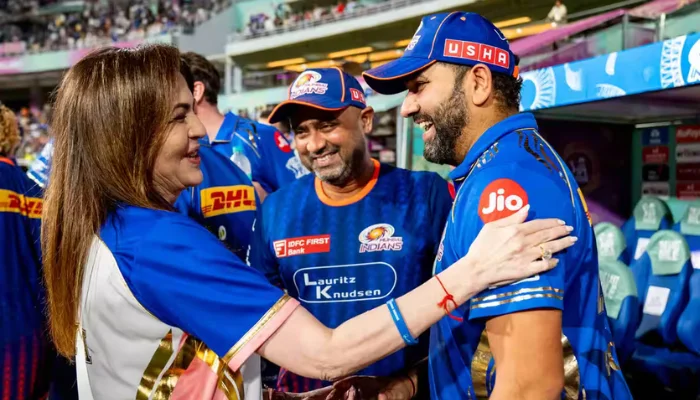
Reliance’s financial strength ensures stability, but what truly defines MI’s ownership model is strategic patience and operational excellence. Nita Ambani plays an active leadership role, shaping MI into a global sporting brand.
| Category | Details |
|---|---|
| Owner | Mukesh Ambani |
| Company | Reliance Industries |
| Acquisition Year | 2008 |
| Purchase Cost | ~$111.9 Million |
| IPL Titles | 5 |
| Estimated Net Worth | $90+ Billion |
MI Ownership Strategy:
Reliance entered the IPL in 2008 with one of the highest bids. Initially inconsistent, MI transformed into a dynasty due to:
- Professional sports management structure
- Data driven scouting system
- Investment in youth academies
- Stable leadership culture
Chennai Super Kings (CSK) Owner: India Cements
Chennai Super Kings is owned by India Cements, led by N. Srinivasan. Unlike corporate heavy models, CSK reflects traditional industrial leadership. N. Srinivasan’s involvement in cricket administration provided the franchise with a deep structural understanding of the game.
CSK’s ownership philosophy revolves around stability. The team rarely makes drastic changes and often backs experienced players for extended periods. This culture has created a family like ecosystem within the franchise.
The biggest test came during the two year suspension (2016 to 2017). Many believed the franchise’s brand value would collapse. However, CSK returned in 2018 and immediately won the IPL title, proving the strength of its loyal fan base and structured management.
| Category | Details |
|---|---|
| Owner | N. Srinivasan |
| Company | India Cements |
| Acquisition Year | 2008 |
| Purchase Cost | ~$91 Million |
| IPL Titles | 5 |
CSK Brand Power
CSK’s success is built on Brand Power. The Whistle Podu Army has one of the most loyal fan bases in India. CSK’s business approach focuses on consistency rather than aggressive expansion. Their regional dominance in Tamil Nadu ensures:
- Consistent ticket sales
- Strong local sponsorship deals
- High merchandise revenue
Royal Challengers Bengaluru (RCB) Owner: Diageo
RCB is owned by United Spirits Limited, under Diageo. RCB’s ownership journey has seen a significant transition. Originally linked to Vijay Mallya, the franchise later moved fully under Diageo’s corporate governance.
Under Diageo, RCB adopted a modern, structured marketing approach. The franchise became one of the most digitally active teams in the IPL. Aggressive branding campaigns, strong social media storytelling, and fan engagement strategies helped RCB maintain one of the largest fan bases despite not winning an IPL title.
RCB’s commercial success highlights an important IPL lesson that trophies are not the only driver of valuation. Strong urban branding, celebrity player association, and consistent engagement can build immense franchise value.
Today, RCB remains among the most commercially powerful IPL teams.
| Category | Details |
|---|---|
| Owner | United Spirits Ltd |
| Parent Company | Diageo |
| Acquisition Year | 2008 |
| Purchase Cost | ~$111.6 Million |
| IPL Titles | 0 |
RCB Ownership Evolution
Originally associated with Vijay Mallya, RCB transitioned to Diageo’s corporate governance model.
Under Diageo:
- Financial operations stabilised
- Brand strategy modernised
- Digital marketing strengthened
Kolkata Knight Riders (KKR) Owner: Shah Rukh Khan & Group
KKR is owned by Shah Rukh Khan, Juhi Chawla, and Jay Mehta. KKR’s early years were inconsistent, but ownership played a transformative role in rebuilding the team’s identity.
Shah Rukh Khan leveraged his global celebrity brand to position KKR as an entertainment driven franchise. The team’s marketing campaigns blurred the line between cinema and cricket.
After strategic restructuring, KKR won IPL titles in 2012 and 2014. Ownership then expanded the “Knight Riders” brand globally, establishing teams in the Caribbean, UAE, and USA.
| Category | Details |
|---|---|
| Owners | Shah Rukh Khan, Juhi Chawla, Jay Mehta |
| Company | Red Chillies Entertainment |
| Acquisition Year | 2008 |
| Purchase Cost | ~$75 Million |
| IPL Titles | 2 |
Global Franchise Network Of KKR:
KKR expanded into:
- Trinbago Knight Riders (CPL)
- Abu Dhabi Knight Riders (ILT20)
- Los Angeles Knight Riders (USA)
KKR operates as a global cricket entertainment network.
Delhi Capitals (DC) Owner: GMR & JSW
Delhi Capitals is jointly owned by GMR Group and JSW Group. The partnership allows for shared financial responsibility and strategic decision making. DC underwent rebranding in 2018, shifting from Delhi Daredevils to Delhi Capitals to mark a new era.
The joint ownership structure ensures diversified business backing from the infrastructure, steel, and energy sectors.
DC’s model reflects corporate collaboration rather than individual leadership dominance.
| Category | Details |
|---|---|
| Owners | GMR & JSW |
| Acquisition Year | 2008 |
| Purchase Cost | ~$84 Million |
| Ownership Type | Joint Venture |
Joint Corporate Governance Model Of DC:
The GMR and JSW partnership provides:
- Infrastructure expertise
- Financial strength
- Corporate governance
DC rebranded from Delhi Daredevils in 2018 to signal a new era.
Rajasthan Royals (RR) Owner: Manoj Badale
RR is owned by Manoj Badale through Emerging Media. RR is often described as the “Moneyball” franchise of IPL. With one of the lowest purchase costs in 2008, RR shocked the cricketing world by winning the inaugural IPL.
Unlike some IPL owners who entered the league for branding or celebrity exposure, Badale approached the IPL as a structured investment opportunity. His background in finance and venture capital shaped Rajasthan Royals’ long term philosophy:
| Category | Details |
|---|---|
| Owner | Manoj Badale |
| Acquisition Year | 2008 |
| Purchase Cost | ~$67 Million |
| IPL Titles | 1 |
Moneyball Strategy Of RR:
RR focuses on:
- Young talent scouting
- Data driven recruitment
- Cost efficient squad building
RR won the inaugural IPL in 2008, proving smart management can outperform bigger budgets.
Sunrisers Hyderabad (SRH) Owner: Kalanithi Maran
SRH is owned by Kalanithi Maran of Sun TV Network. After replacing the Deccan Chargers, SRH quickly built a reputation for disciplined bowling units.
Being backed by a major media network gives SRH strong broadcasting and promotional advantages. The franchise’s financial backing ensures stability despite fluctuating performances.
| Category | Details |
|---|---|
| Owner | Kalanithi Maran |
| Acquisition Year | 2012 |
| IPL Titles | 1 |
| Business Sector | Media & Broadcasting |
SRH replaced Deccan Chargers and quickly became a competitive side. Their ownership benefits from media network leverage and regional dominance.
Punjab Kings (PBKS) Owner: Multi Stakeholder Model
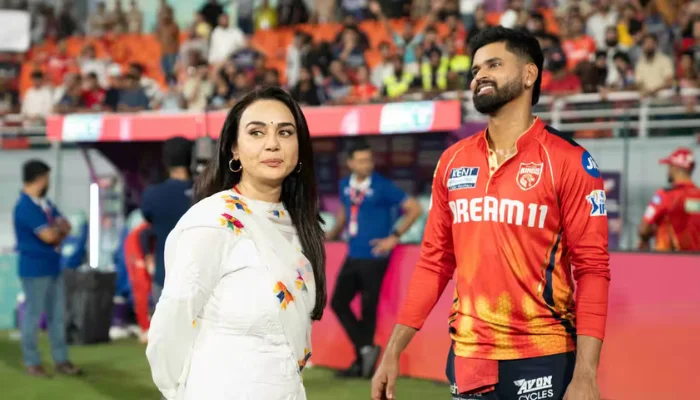
Punjab Kings has multiple owners, including Preity Zinta and Ness Wadia. PBKS has a strong brand recall but is still chasing its first IPL title. PBKS has struggled to convert brand appeal into titles. However, its ownership ensures continued financial backing and strategic restructuring efforts.
| Category | Details |
|---|---|
| Owners | Zinta, Wadia, Burman, Paul |
| Acquisition Year | 2008 |
| Purchase Cost | ~$76 Million |
| Ownership Type | Multi Stakeholder |
Gujarat Titans (GT) Owner: CVC Capital Partners
Gujarat Titans is owned by CVC Capital Partners, a global private equity and investment advisory firm. Unlike traditional IPL franchises owned by industrialists, celebrities, or corporate houses, GT represents the arrival of institutional investment into Indian cricket.
When the IPL expanded in 2021, CVC Capital Partners acquired the Ahmedabad based franchise for ₹5,625 crore, making it one of the most expensive teams in IPL history at the time. GT won the IPL in their debut season, validating strong management and structured planning.
From day one, the Gujarat Titans operated with a structured, investment driven mindset, and the results were immediate.
| Category | Details |
|---|---|
| Owner | CVC Capital |
| Acquisition Year | 2021 |
| Purchase Price | ₹5,625 Crore |
| IPL Titles | 1 |
Lucknow Super Giants (LSG) Owner: Sanjiv Goenka
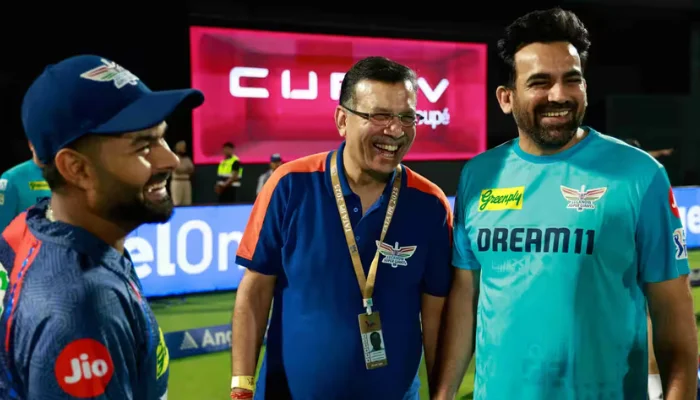
LSG is owned by RPSG Group, led by Sanjiv Goenka. LSG’s record breaking acquisition fee signals confidence in IPL’s long term valuation growth.
Goenka’s previous experience with Rising Pune Supergiant helped him refine franchise operations.
| Category | Details |
|---|---|
| Owner | Sanjiv Goenka |
| Acquisition Year | 2021 |
| Purchase Price | ₹7,090 Crore |
| Business Sector | Power, Retail |
How IPL Team Owners Earn Money?
IPL team owners earn money through multiple revenue streams, including media rights sharing, sponsorship deals, ticket sales, merchandise, prize money, and franchise valuation growth. The IPL operates on a franchise based revenue sharing model governed by the BCCI, which ensures steady income for team owners every season.
1. Central Media Rights Revenue
The largest source of income for IPL team owners comes from the league’s central media rights deal.
The BCCI sells IPL broadcasting and digital streaming rights for billions of dollars in multi year cycles. A significant percentage of this revenue is distributed among the franchises.
For example:
- The 2023–2027 IPL media rights deal was worth over ₹48,000 crore.
- A large portion of this amount is shared equally among the 10 teams.
This guarantees every franchise a strong base income before the season even begins.
Why it matters:
Even if a team performs poorly, it still receives substantial central revenue.
2. Team Sponsorship Deals
Each IPL team signs independent sponsorship agreements.
Common sponsorship categories include:
- Title sponsor (jersey front)
- Associate sponsors
- Sleeve sponsors
- Kit sponsors
- Official partners
Top franchises earn hundreds of crores annually through sponsorship contracts alone.
Successful teams with strong fan bases (like MI, CSK, RCB) typically command higher sponsorship value.
3. Ticket Sales & Matchday Revenue
Teams earn money from ticket sales during home matches.
Revenue sources include:
- General ticket sales
- VIP & corporate boxes
- Hospitality packages
- Food & beverage sales
While stadium revenue is shared with state cricket associations in some cases, matchday earnings still form a significant portion of a franchise’s seasonal income.
Teams with larger stadiums (like the Gujarat Titans at Narendra Modi Stadium) have higher revenue potential.
4. Merchandise Sales
Official merchandise is another growing revenue stream.
Teams sell:
- Jerseys
- Caps
- Training kits
- Fan accessories
- Limited edition collectables
With the growth of e commerce and digital marketing, merchandise revenue has increased significantly in recent years.
Popular teams with loyal fan bases generate strong online merchandise sales.
5. Prize Money
Teams earn prize money based on performance.
For example:
- IPL champions receive a significant cash reward.
- Runner up and playoff teams also earn financial rewards.
While prize money is not the largest revenue source, it adds to overall profitability.
6. Franchise Valuation Growth (Long Term Profit)
One of the biggest financial gains for IPL owners comes from franchise valuation growth.
Example:
- Rajasthan Royals were bought for ~$67 million in 2008.
- New franchises in 2021 were sold for ₹5,000–7,000+ crore.
This massive increase in valuation means owners can make huge profits if they sell their stake or exit their investment.
Private equity firms (like CVC Capital) often view IPL teams as appreciating assets.
7. Brand Extensions & Global Expansion
Some franchises expand beyond the IPL into other T20 leagues.
Examples:
- Mumbai Indians own teams in the USA, UAE, and South Africa.
- KKR owns teams in the Caribbean and the UAE leagues.
These expansions create additional revenue streams and enhance global brand value.
8. Digital & Content Monetisation
With growing digital viewership, franchises also earn through:
- YouTube monetization
- Social media brand partnerships
- OTT collaborations
- Exclusive content deals
Digital presence increases sponsorship value and brand equity.
Conclusion:
IPL team owners are the backbone of the league’s financial and structural success. From billionaires like Mukesh Ambani to global investment firms like CVC Capital, these owners have transformed IPL into a global sports powerhouse.
As franchise valuations continue to rise, IPL ownership remains one of the most prestigious investments in international cricket.
FAQs:
Mukesh Ambani remains the richest IPL team owner in 2026 with a net worth exceeding ninety billion dollars. Through Reliance Industries, he owns the Mumbai Indians and has expanded his cricket portfolio globally to include teams in the UAE, South Africa and the USA.
In early 2026, both Royal Challengers Bengaluru and Rajasthan Royals are undergoing major ownership changes. Diageo is divesting its stake in RCB after the team won the 2025 title, while Manoj Badale is evaluating bids for Rajasthan Royals. Global investors like Avram Glazer and Adar Poonawalla are reportedly among the top bidders for these franchises.
Chennai Super Kings is owned by Chennai Super Kings Cricket Limited, which is closely associated with India Cements. Led by N Srinivasan, the group has a massive presence in the infrastructure and cement industry. Their management style is famous for maintaining a stable core of players and coaching staff since the league began in 2008.
Kolkata Knight Riders uses a successful blend of Bollywood star power and corporate expertise. The franchise is co owned by Shah Rukh Khan and Juhi Chawla through Red Chillies Entertainment, alongside the Mehta Group led by Jay Mehta.
The ownership of the Gujarat Titans shifted after the Torrent Group acquired a sixty seven percent majority stake from CVC Capital Partners for five thousand and fifty crore rupees.

