
The Indian Premier League (IPL) has become the gold standard of global cricket, attracting millions of viewers with its high octane format. If you’re a new fan or just brushing up on the rules, the most fundamental question is: How many overs are played in IPL matches?
How Many Overs in IPL?
A standard IPL match consists of 20 overs per innings, in total 40 overs for the entire match. Each team has 120 legal deliveries to score runs, unless the match is shortened due to rain or concluded early by a successful run chase.
IPL Match Length: How Many Overs and Balls are Played?
In every IPL match, both teams are allotted 20 overs. This confirms its status as a Twenty20 (T20) cricket match, the shortest and most explosive professional format.
The breakdown is simple:
- 120 Balls per Side: Each over consists of 6 legal deliveries.
- The Powerplay (Overs 1–6): Only two fielders are allowed outside the 30 yard circle, making this the best time for batters to hit boundaries.
- Post Powerplay (Overs 7–20): Up to five fielders can move to the boundary, shifting the game into a more tactical “cat and mouse” battle.
Why 20 Overs?
The 20 over format was designed to fit into a 3 to 4 hour window, making it perfect for prime time television and evening stadium outings. While Test matches last 5 days and ODIs take 8 hours, the IPL’s 20 over structure ensures constant action from the first ball to the last.
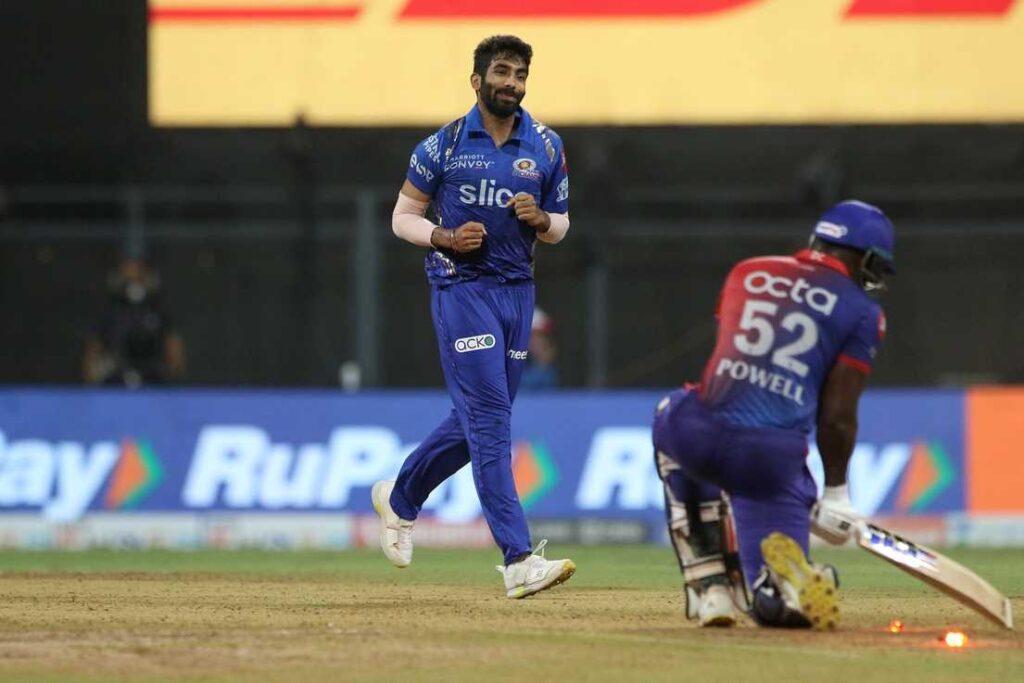
Overs Comparison with Other Cricket Formats:
In cricket, the number of overs played in a match is crucial to determining the pacing, strategy, and overall experience of the game. Here’s a quick comparison of overs in IPL with other popular cricket formats:
| Format | Overs per Team | Match Duration | Key Characteristics |
| Test Cricket | Unlimited (2 innings per team) | 5 days (typically) | Played over 5 days, focusing on technique, endurance, and strategy. |
| One Day International (ODI) | 50 overs | ~8 hours (including breaks) | A balance between attack and defense. Longer than T20 but shorter than Tests. |
| Twenty20 (T20) | 20 overs | ~3 to 4 hours | Fast paced, focused on attacking play and quick decisions. |
| IPL (T20) | 20 overs | ~3 to 4 hours | A high octane, entertainment packed format played between the best international players. |
As you can see, IPL’s 20 over format stands out for its combination of entertainment, strategy, and time efficiency. The limited overs make the game exciting and fast, in contrast to longer formats like ODIs and Test matches, which offer more time for strategic play.
IPL Match Structure in Detail:
For the 2026 season, the IPL has expanded to 84 matches, but the core structure of each individual game remains consistent:
- The Toss (30 Mins Before Start): Captains meet in the middle to decide who bats or bowls first.
- First Innings (20 Overs): The attacking phase where the setting team aims for a high total (typically 180+ in modern IPL).
- Strategic Timeouts: Each innings features two 2.5 minute breaks. The bowling team takes theirs between overs 6 and 9, and the batting team between overs 13 and 16.
- The Mid Innings Break (15 Minutes): A quick reset for the ground staff and teams.
- Second Innings (20 Overs): The “chase.” The second team must score one more run than the first team to win.
- The Impact Player: Since 2023, teams can swap one player from their bench at any point, effectively giving them an “extra” specialist batter or bowler for their allotted overs.
The Role of the Impact Player Rule in IPL Matches:
Since 2023, IPL has introduced the Impact Player rule, allowing teams to substitute one player from the bench at any point during the match. This has added a new layer of strategy, especially in how teams manage their 20 overs, fielding combinations, and matchups.
Time Management and Match Duration in IPL:
One of the key advantages of the IPL’s 20 over format is its perfect fit for today’s fast paced lifestyle. Here’s why match duration and time management are crucial:
- Quick and Engaging: IPL matches last around 3 to 4 hours, including a 15 minute break. This makes it ideal for prime time viewing, unlike ODIs or Tests, which take an entire day or more.
- Convenient for Fans: The shorter duration makes it easy for fans to enjoy the game without dedicating an entire day. Matches are held in the evening, making them accessible even for those with busy daytime schedules.
- Strategic and Fast Paced: The 20 over format demands quick thinking. Batters are aggressive, bowlers adjust on the fly, and captains make fast decisions, ensuring constant excitement.
- Each team gets two Strategic Timeouts per innings, lasting 2.5 minutes each. These allow teams to regroup, discuss strategies, and adjust game plans in real time.
This structure keeps the game thrilling and ensures the audience remains hooked from start to finish.
IPL Rain Rules: Minimum Overs and the DLS Method
While the IPL usually follows a 20 over format, there are cases when the match might get interrupted, typically due to weather conditions.
If this happens, the number of overs can be reduced, but the rules ensure that both teams face an equal number of overs.
- Rain or bad weather: If rain interrupts the match, the Duckworth Lewis Stern (DLS) method is applied to recalculate the target, ensuring that both teams have a fair chance to win.
- Minimum Overs: The minimum number of overs that can be played per side in an IPL match, after any weather interruptions, is 5 overs.
What is the DLS System?
The DLS (Duckworth Lewis Stern) method is a mathematical formula used to adjust the target score in limited overs cricket when a match is interrupted by weather conditions, such as rain. The system takes into account the number of overs remaining for each team, the number of wickets they have in hand, and the scoring rate to calculate a fair target for the team chasing the score.
The DLS method ensures that both teams are given an equal opportunity to win, despite interruptions. It was originally devised by Frank Duckworth and Tony Lewis in 1997, and later revised by Steven Stern. The DLS system is now the standard for all major limited overs cricket tournaments, including the IPL, providing a fair and transparent way to deal with disrupted matches.
IPL Overs and Strategies:
The number of overs in IPL impacts the strategies employed by both the batting and bowling sides. Here’s how:
Batting Strategy:
- Fast Starts: Since every team has only 120 balls to play, attacking the bowling early is crucial. Most teams use power hitters in the opening overs to take advantage of the field restrictions in the power play.
- Middle Overs: In the middle of the innings, the batting side focuses on rotating the strike and finding gaps. Batters need to build partnerships while maintaining a high run rate.
- Death Overs: The final few overs (overs 16 to 20) are crucial. Teams often send in their big hitters, aiming to score as many boundaries and sixes as possible to set or chase a big target.
Bowling Strategy:
- Powerplay Overs: In the first 6 overs, bowlers focus on containment and taking early wickets. This period is key to building momentum.
- Middle Overs: Bowlers focus on dot balls and field placements, trying to restrict runs and take wickets.
- Death Overs: The last overs are the most challenging for bowlers. They need to bowl yorkers, slower balls, and variations to prevent the batters from hitting boundaries.
The Role of Fielding Strategies in IPL:
Fielding strategies are crucial for controlling the game and supporting both batting and bowling efforts. By strategically placing fielders during different phases of the game, teams can either apply pressure or limit scoring opportunities, significantly influencing the outcome of the match.
| Phase | Overs | Fielders Outside Circle | Strategic Goal |
| Powerplay | 1–6 | 2 Max | Maximum boundaries / Early wickets |
| Middle Overs | 7–15 | 5 Max | Rotating strike / Building pressure |
| Death Overs | 16–20 | 5 Max | “All or nothing” hitting / Yorker bowling |
Targeted Fielding:
Field placements are often adjusted based on the batsman’s strengths and weaknesses. By targeting specific areas of the field, teams can reduce the risk of boundaries and force batsmen to play more carefully.
Balancing Attack and Defense:
Successful teams in IPL constantly switch between aggressive and defensive field placements, depending on the match situation. This flexibility allows captains to respond to the evolving dynamics of the game and manage pressure effectively.
IPL: A Format That Appeals to All
The 20 over format has made IPL an event that is not only loved by cricket fans but also by people from all walks of life. With rapid fire action, thrilling last minute finishes, and top players from around the world, it brings something fresh every time.
This format has proven to be successful in attracting both die hard cricket fans and new audiences, and it continues to grow every year.
Conclusion:
In conclusion, the number of overs played in an IPL match is 20 overs per team. This structure has revolutionised cricket and made the IPL one of the most exciting leagues in the world. The combination of fast paced action, strategic depth, and thrilling moments makes the 20 over format ideal for the fast paced entertainment world of today.
Whether you’re watching a team set a massive total or a team trying to chase it down, the IPL format guarantees entertainment from start to finish.
FAQ’s:
In a standard IPL match, both teams bowl 20 overs each, which means a total of 40 overs are bowled in a complete game, unless rain or interruptions affect the number of overs.
Yes, IPL matches can be reduced to fewer overs due to weather delays or interruptions. The minimum number of overs per side is 5 overs, and the Duckworth Lewis Stern (DLS) method is used to adjust the target accordingly.
The number of overs in an IPL match is generally fixed at 20 overs per side. However, if there are weather interruptions, the umpires and match officials, in consultation with the teams, determine the number of overs, applying the DLS method if necessary.
The DLS (Duckworth Lewis Stern) method is used to recalculate the target score in a rain affected match. If the number of overs is reduced, the DLS method helps determine a fair target by adjusting the score in proportion to the number of overs left.
No, each team is allowed to bowl a maximum of 20 overs in an IPL match. However, if there are interruptions or delays, the total overs per side may be reduced, but never increased.

Kiran is a cricket analyst and writer with strong expertise in the Indian Premier League and modern cricket. He closely follows match situations, player performances, team strategies, and season trends to deliver clear and accurate insights. Passionate about the game, Kiran enjoys exploring emerging talents, tracking auction movements, and sharing timely updates related to IPL and competitive cricket.
